

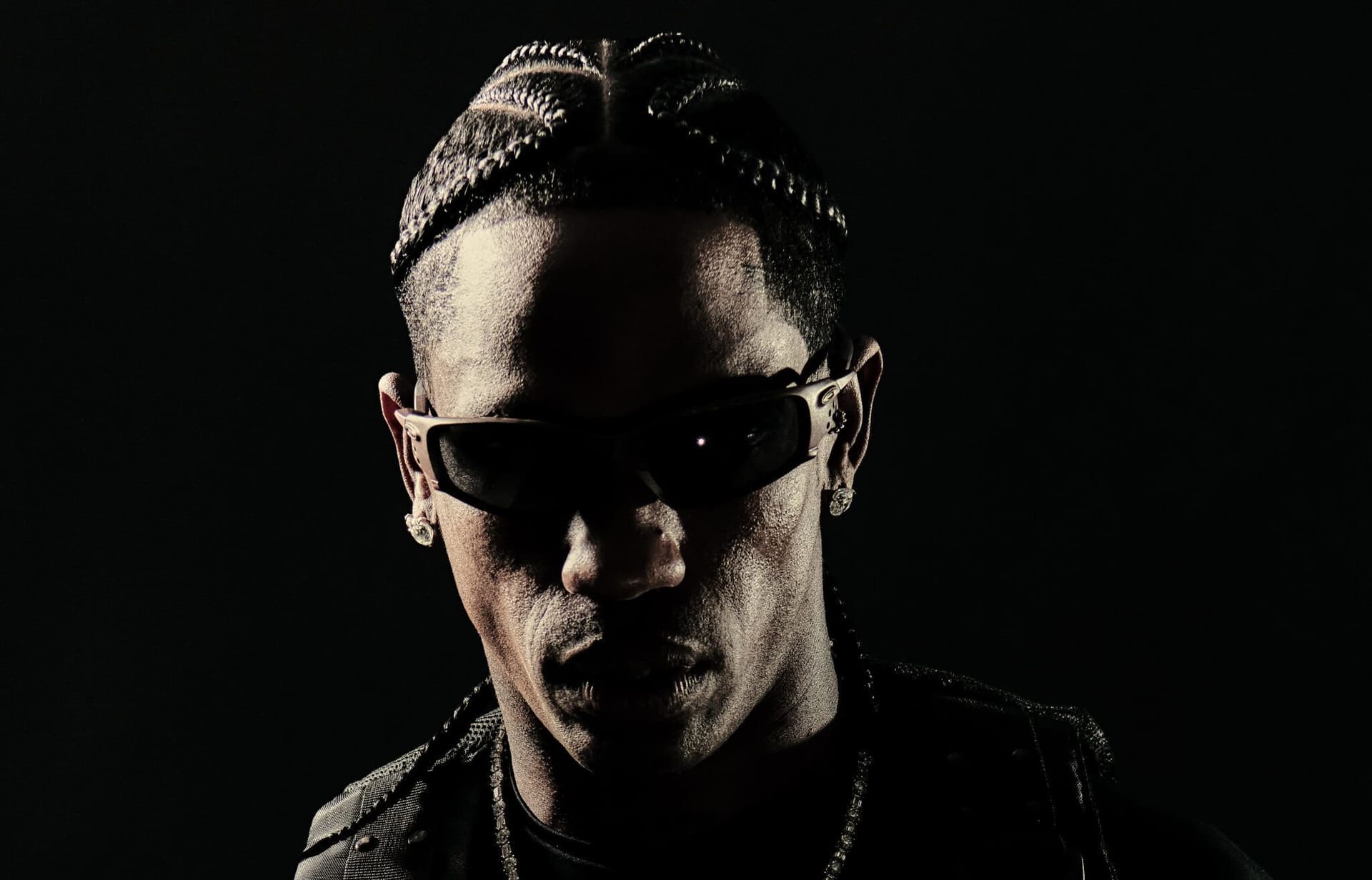
In the 90s, Oakley frames defined an era of athletic excess. Three decades later, they're doing it again—with Travis Scott leading the charge.
Before Oakley became a streetwear reference, there was Peter Yee — the designer who gave the brand its visual language.
Hired in 1993 as Oakley's first trained industrial designer, Yee spent 25 years shaping every iconic silhouette: the Eye Jacket, Romeo, Over The Top, Time Bomb watch. Over 100 design patents. He also created the elliptical "O" logo still used today.
His breakthrough was "accelerating curves" — surfaces borrowed from race car aerodynamics. Before him, eyewear was geometric and predictable. Yee made frames that looked like they were moving while standing still.
The Romeo (1997) launched the X-Metal series. Tom Cruise wore them in Mission: Impossible II. Michael Jordan collected them. The Eye Jacket now sits in MoMA's permanent collection.
By the time he left in 2018, Oakley had grown from $76 million to $1.6 billion.
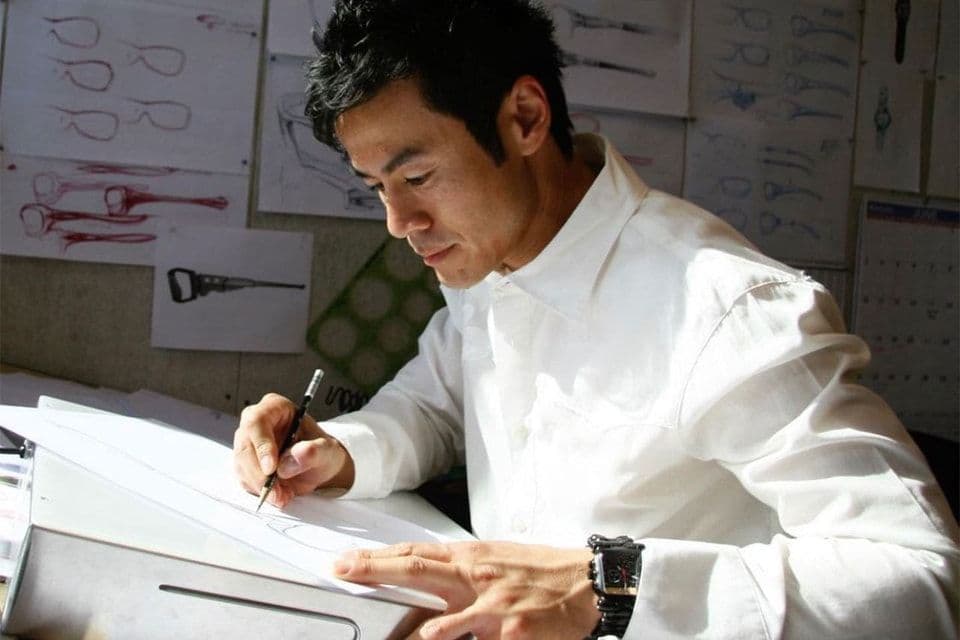
Peter Yee
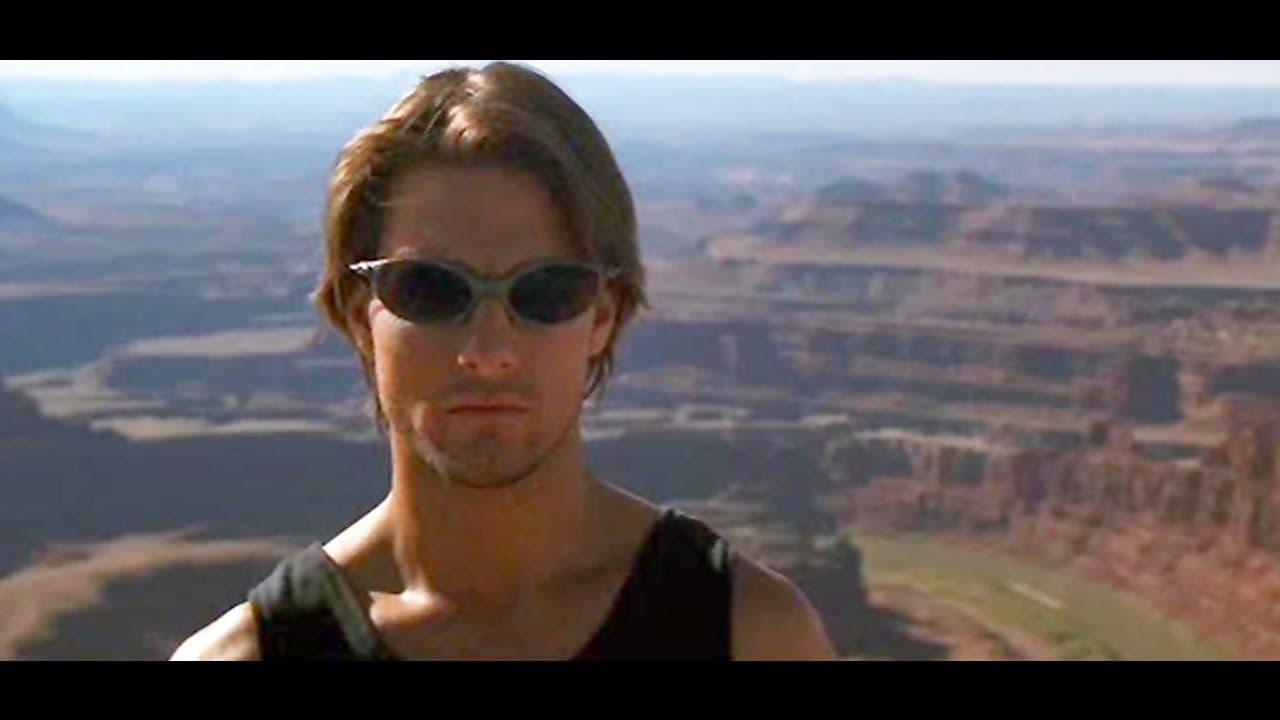
Tom Cruise in Mission Impossible II in the Oakley X-Metal
There's a particular kind of eyewear that only makes sense in context. The wraparound, sculpted, unapologetically futuristic frames that dominated the 90s weren't designed to be subtle. They were designed to be seen—on courts, on tracks, on the faces of athletes who understood that presence matters as much as performance.
Michael Jordan understood this. Dennis Rodman took it further. And now, a new generation is rediscovering what Oakley knew all along: aggressive design ages better than safe design.
The Jordan Era
Michael Jordan wasn't just an Oakley endorser—he sat on the company's board of directors. His influence shaped some of the brand's most iconic frames, including the Mars Leather, a limited-edition style that launched in 1998 and became the holy grail of Oakley collectors.
The Mars wasn't a subtle piece. Built from X-Metal—a titanium alloy forged under extreme heat with machining precise to 0.0005 inches—the frame featured hand-stitched leather accents wrapped tightly around the metal. Jordan wore them during the Chicago Bulls' second three-peat celebration parade. The message was clear: championship-level performance deserves championship-level style.
Throughout The Last Dance, Jordan cycled through Oakley's greatest hits: the Romeo, the Juliet, the M-Frame, the Eye Jacket, the Trenchcoat. Each pair more aggressively styled than the last. Each pair unmistakably of its moment.
"Growing up as an athlete, as a lover of sports, coupled with that 90s hip-hop culture and guys like Michael Jordan, Dennis Rodman—everyone was in Oakley's in the 90s," recalls one longtime collector. "You can't have cycling without Oakley's. They're just intertwined."
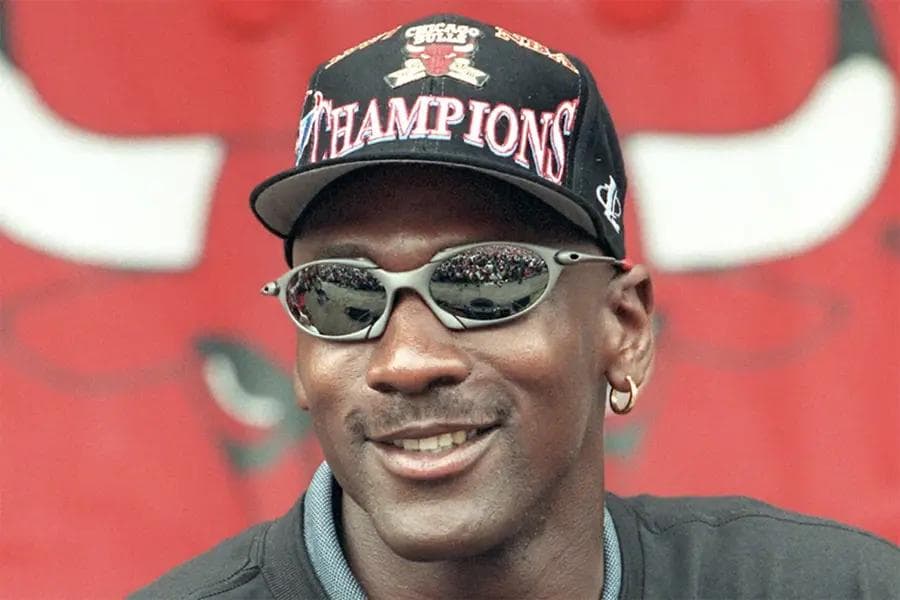
Micheal Jordan in Oakley Redux
The Rodman Factor
If Jordan brought credibility, Rodman brought chaos.
The Chicago Bulls' enfant terrible pushed Oakley's aesthetic to its limits. In Double Team (1997), Rodman's character wore the Sub Zero—silver frames with blue-tinted lenses that looked lifted from a cyberpunk film. Off-screen, he paired Oakley's most experimental designs with colored hair, piercings, and the kind of boundary-pushing fashion that wouldn't become mainstream for another two decades.
Rodman understood something that fashion would take years to articulate: functional eyewear designed for extreme performance creates its own aesthetic category. The same frames that protected sprinters' eyes at 25 mph looked equally compelling under nightclub lights.
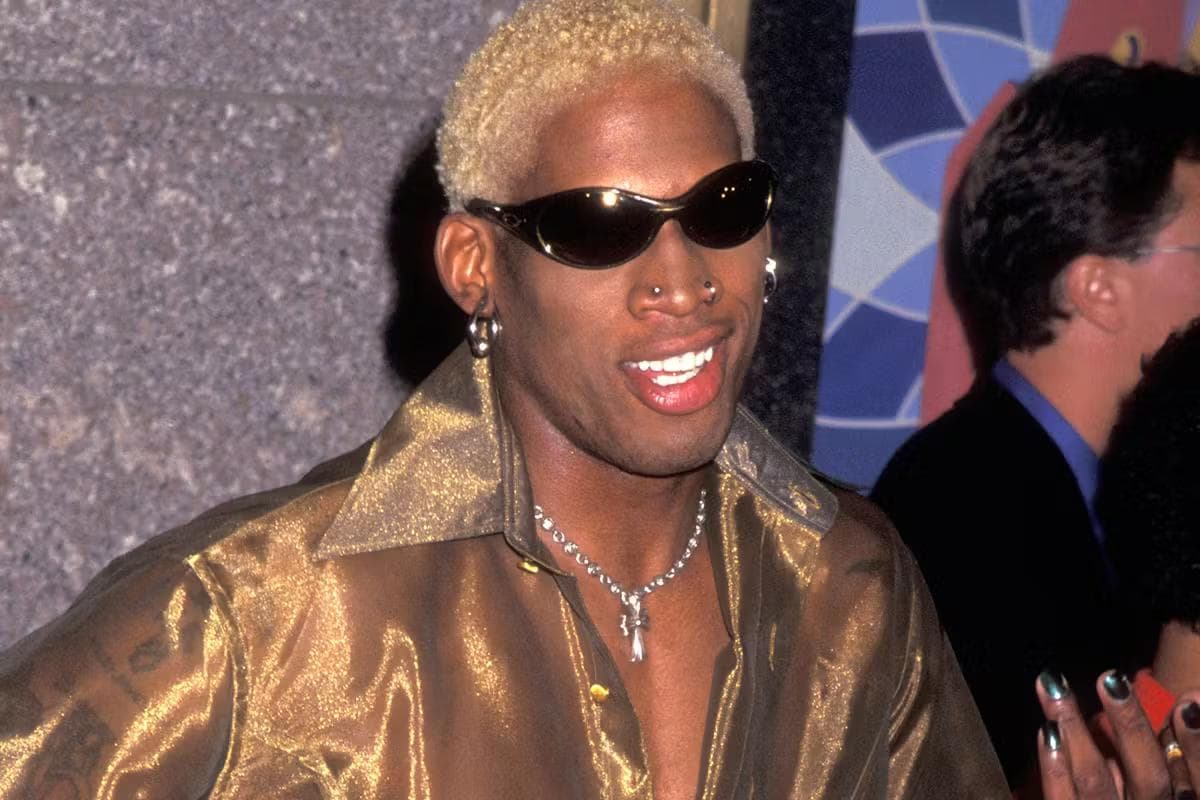
Dennis Rodman in Oakely Redux at the VMAs
The Over The Top
No Oakley better captures the brand's peak audacity than the Over The Top.
Designed by Peter Yee, the OTT secured to the wearer's head not over the ears, but over the top of the skull—eliminating bounce during sprinting while creating a silhouette that looked genuinely alien. Trinidadian sprinter Ato Boldon wore them at the 2000 Sydney Olympics. Flavor Flav performed in them. They appeared in Blade II and Spy Kids 3.
Original pairs now sell for $1,500 to $3,000. The design was too expensive to manufacture at scale, too strange for mass adoption. But that strangeness is precisely what made it iconic.
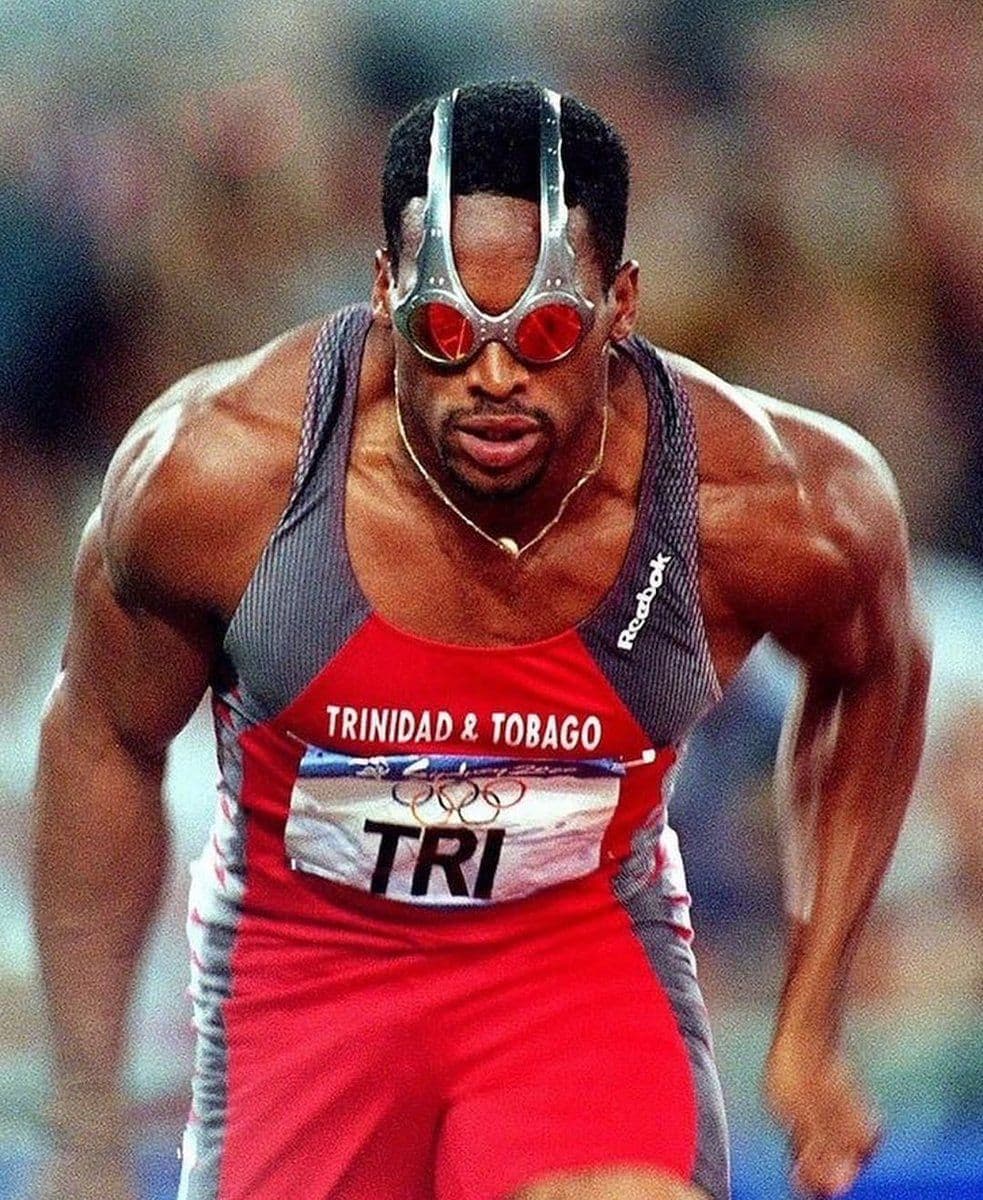
Ato Boldon in Oakley Over The Top at the 2000 Sydney Olympics
The Quiet Years
After the early 2000s, Oakley's cultural presence faded. The brand remained dominant in cycling, golf, and military applications, but fashion moved toward minimalism. The aggressive frames that defined the 90s felt dated against the clean lines of the 2010s.
Then the pendulum swung back.
Y2K nostalgia brought retrofuturism into vogue. Performance aesthetics merged with streetwear. Suddenly, the same frames that felt excessive in 2010 felt prescient in 2020. The Last Dance aired, and a new generation discovered Jordan's Oakley rotation. Google searches for vintage models spiked.
The Travis Scott Chapter
Travis Scott didn't wait for an official partnership. Since at least 2021, he'd been wearing Oakley daily—on tour, on vacation, in paparazzi shots, everywhere. During the Circus Maximus world tour, he commissioned custom Oakley body armor to match his frames. He even namedropped the brand on a 2024 Nicki Minaj single.
"Scott has so consistently pushed Oakley into the greater zeitgeist since at least 2021 that it's more uncommon to not see him wearing Oakley shades or sportswear," observed Highsnobiety.
In 2025, it became official. Oakley named Travis Scott their first-ever "Chief Visionary"—a multi-year partnership that puts his Cactus Jack creative team at the center of the brand's future direction.
His first major act? Reviving the X-Metal Juliet, one of the most coveted frames in Oakley's archive. Limited to 100 individually serialized pieces, the Cactus Jack collaboration brought back the exact 25-piece titanium construction that made the original legendary.
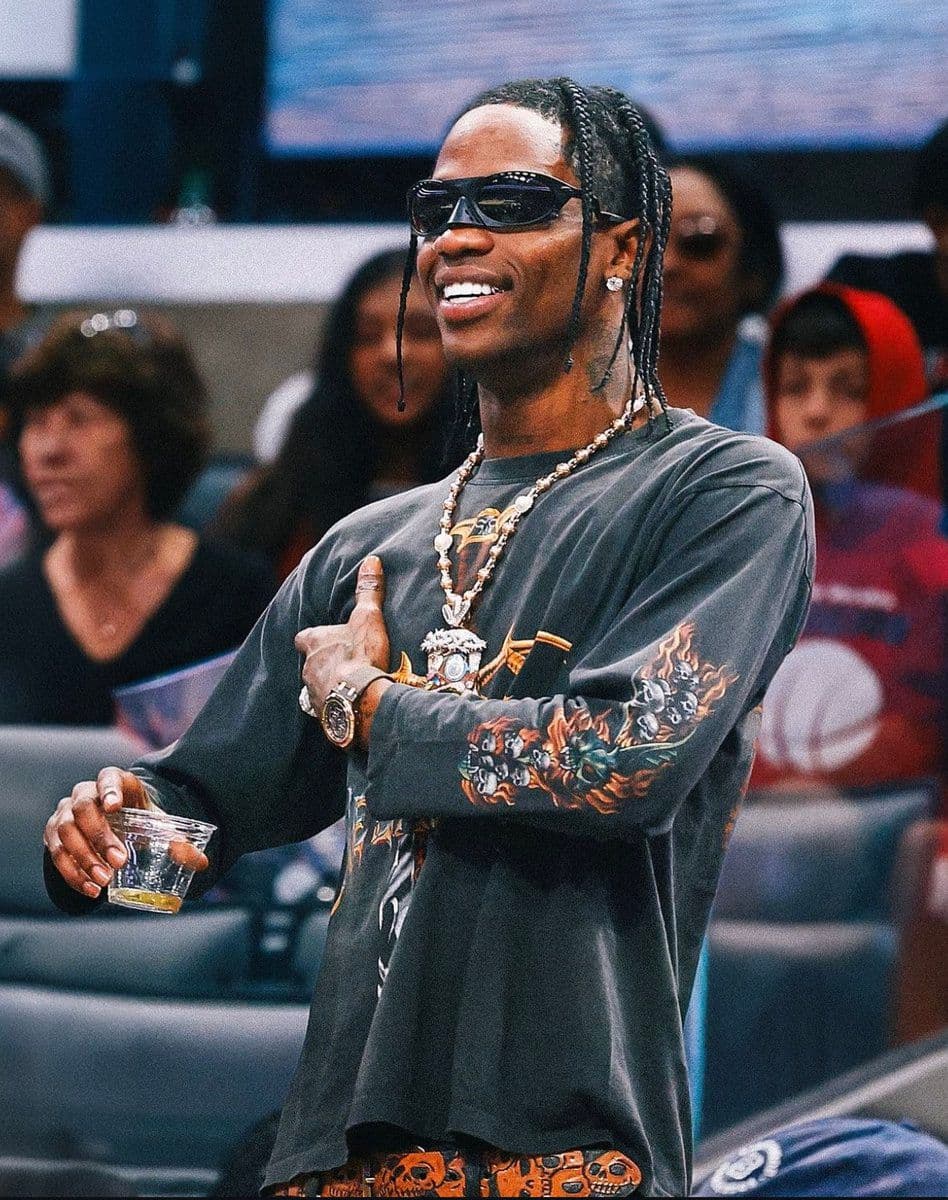
Travis Scott in the Oakley Plantaris
The Loop Closes
What Travis Scott represents isn't a departure from Oakley's heritage—it's a continuation. The same energy that Michael Jordan brought courtside, the same boundary-pushing attitude that Rodman embodied, now flows through a new generation of culture-shapers.
"Oakley's design game is next level, and I had to be part of that," Scott said in a statement. "We're building something that blends legacy with the future."
From courtside to Cactus Jack. From 1998 to 2025. The frames changed, but the philosophy remained: build for performance, and style will follow.
Shop the Collection
Explore our Oakley selection—where performance meets presence.
Oakley
Flak 2.0 Xl
Available in
One Size
2 640 SEK


